 30 Mar 2017
Tags: Japan, McCluskey International, Holiday, adventure holidays, travel, Airport Parking And Hotels, APH, Tourism, Wildlife, News, travelling, Indian Ocean, North America, dangerous animals, exotic animals, hippo, Central Africa, polar bear, the Artic, central america, Pacific Ocean, adventure travellers, adventure travel

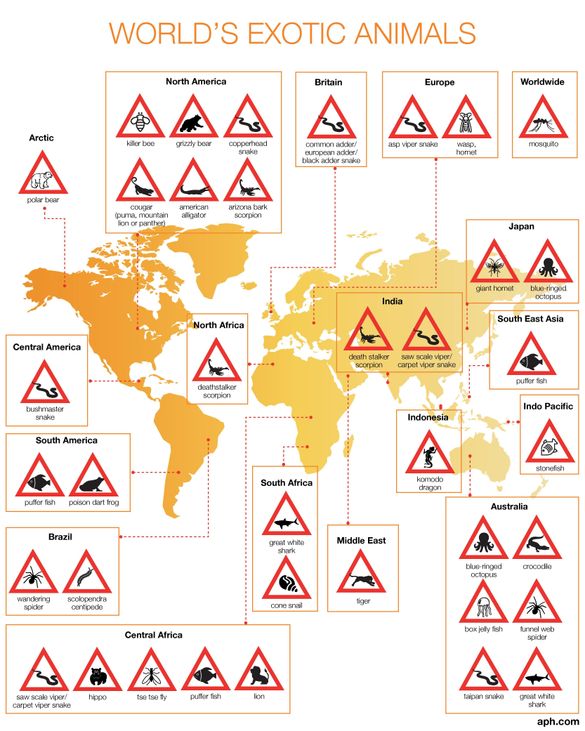
With recent travel trend reports* pointing to a rise in adventure holidays during 2017, UK consumers could be slightly increasing their chance of encountering a potentially dangerous animal. From the Arizona bark scorpion in North America to the blue-ringed octopus in Japan, Airport Parking and Hotels (APH) has put together a guide to some of the world's most interesting wildlife to help travellers prepare for their adventures this year. The information is available in the Know Before You Go section on the APH website at www.aph.com/arachnidawareness.
The research compares the defining features of some of the world's most deadly species, such as the blue-ringed octopus, polar bear and cone snail, highlighting how travellers can reduce their risk from attacks, where the animals are generally found and additional information to keep in mind.
While some of the most dangerous animals researched are easily recognisable, such as the mighty hippo in Central Africa and the white furry polar bear in the Artic, many of the animals examined are less easily identified. For example, visitors to South and Central America should be aware that the toxic poison dart frog is not only miniature in size but can also be found in many different colours, while travellers with plans to swim in parts of the Pacific and Indian Oceans should be mindful of the aptly-named stonefish, which may look like a harmless rock, but is actually highly venomous.
With regards to reducing travellers' potential risk from wildlife attacks, there are a range of precautions that can be taken to protect oneself. Some measures are straight-forward, such as using bug or bee repellent to deter killer bees in North America and mosquitos globally, however others are more complex. For example, holiday-makers on safari in Central Africa looking to avoid the bite of the tse tse fly are advised to coat themselves in antiseptic, which may also deter travel companions from getting close too.
No matter how tempting it may be to get up close to an exotic animal for a photo opportunity or a cuddle, the most advisable policy for travellers to remember is to keep at a safe distance from animals. When exploring more dangerous territory, adventurers are advised to ensure they are accompanied by a trained guide at all times.
For unlucky travellers who do find themselves approached by a harmful animal, the best method for defending oneself varies greatly. It may go against natural instinct, but travellers are advised to stand their ground if confronted by a lion, tiger or a grizzly bear. On the contrary, explorers are warned to never yell at a grizzly bear, but to speak to it with a calm voice while backing away. Similarly, surfers and swimmers should remember that attempting to hit a shark on the nose or gills may just save your life in the event of an attack.
While travellers should be aware of the animals that could be roaming near their holiday spots, it is important to remember that the chance of encountering a dangerous animal is minimal. Most of the animals researched do not typically attack humans, but it is vital to remember that any can be aggressive if provoked.
For further information on Airport Parking and Hotels (APH),
Visit www.aph.com or call 01342 859515.
ENDS
NOTE TO EDITORS
* According to Travel Daily Media in November 2016, available at http://www.traveldailymedia.com/244005/2017s-hottest-travel-trends-revealed/.
** Research compiled in March 2017.
About Airport Parking and Hotels (APH)
Airport Parking and Hotels (APH) is an award winning airport parking operator and retailer, after winning the Best Airport Parking Company for a seventh year running at British Travel Awards 2016. This year APH also celebrated its 36th year as a retailer and operator of pre-booked airport parking and travel extras. APH offers parking at all major UK airports as well as airport hotels and airport lounges. As well as supporting the World Land Trust through the purchase of more than 1,000 acres of endangered rainforest, APH is also a proud corporate sponsor of the University of Southampton Centre for Cancer Immunology, where the world's most eminent experts come together in the quest to find new and innovative treatments.
Media Enquiries
Sarah Salord / Libby Hughes / Jennifer Jones / McCluskey International / 020 8747 2170 / aph@mccluskey.co.uk