 29 Jan 2015

Come to Ontario, the Land of Shining Waters. Escape to the beauty and splendour of a four-season destination where outdoor, city and touring experiences await you in varied regions. With over 200,000 lakes and countless rivers, Ontario has the most canoe routes in the world so come and paddle! If you fancy a cosmopolitan getaway, great entertainment, stylish shopping and gourmet dining await. Alternatively, try dog sledding through an untouched winter wonderland or tour through vineyards and sample Ontario's internationally award-winning wines. Come to Ontario, where you can discover all this and more.
Outdoor Experiences
Discover the countless outdoor activities to enjoy in Ontario in every season. Summer means exploring myriad lakes and rivers that are perfect for swimming, sailing, canoeing, kayaking, whitewater rafting, boating, fishing and other water sports. Bask in the sun on Georgian Bay's Wasaga Beach, the longest freshwater beach in the world (14 kilometres long), or experience the beaches of Southern Ontario, which extend 800 kilometres and include the shores of Lake Ontario, Lake Huron, Lake Erie, Lake Simcoe and Lake St. Clair. Ontario is a canoe and kayak paradise: explore its many lakes and rivers with Paddling Ontario, an association of experienced outfitters and guides. For land lovers, over 650 public and semi-private golf courses can be enjoyed throughout Ontario, while hiking, horseback riding and mountain biking are splendid pursuits for enjoying the natural beauty.
In winter, a perfect blanket of snow covers most parts of Ontario, and wonderful opportunities exist for snowmobiling, snowshoeing and dog sledding. The longest integrated snowmobile network in the world is in Ontario as is the world's largest skateway, the Rideau Canal (7.8 kilometres long) in Ottawa.
Fall and spring tempt with their own unique appeal. Ride an ATV (all-terrain vehicle) along the many trails of rural and Northern Ontario or hike the Bruce Trail along the UNESCO-recognized Niagara Escarpment. Engage in bird or butterfly watching, as Ontario is world renowned for its fall and spring bird and butterfly migrations. Point Pelee National Park, the southernmost point of Canada, is one of the finest locations for bird and butterfly watching, and during migration season hundreds of species can be observed.
Discover the Arts in the Wild alliance, an organization that offers the opportunity to combine the outdoors with the arts. Hike or paddle into the wilderness and capture the majesty of the landscape on canvas or film, sketch or sculpt wildlife in their natural habitats or learn the art of basketry or drum making. Diverse getaway packages are offered at northern lodges, art academies, parks, galleries, cultural sites and lakeside resorts across Ontario. This four-season outdoor experience lets you take a little of the beauty that is Ontario home with you.
City Experiences
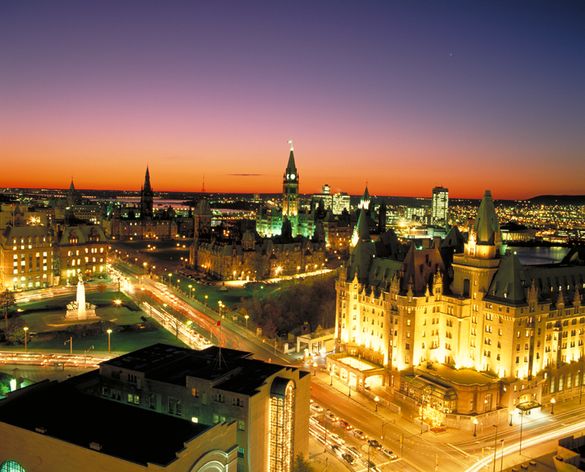
Urban pleasures await year round in Ontario's safe city centres. Ottawa, Canada's capital, is a city with impressive architecture and Old World charm bordered by parklands and rivers. The city is packed with culture, entertainment, dining and shopping and its galleries, theatres and museums showcase historic and contemporary masterpieces presenting the nation's colourful past and a glimpse of the future.
Besides the impressive natural wonder of the Falls, Niagara Falls is also an exciting urban centre with a variety of attractions. Remarkable outlet shopping offers you the best in bargain hunting, or try your luck at the huge casinos, with thousands of slot machines and hundreds of gaming tables. Regional cuisine and award-winning Niagara wines can also be enjoyed, as can scenic helicopter rides, a boat that takes you up close to the Falls or a visit to a relaxing spa.
Toronto's stylish and hip city centre is full of cosmopolitan excitement. Incredibly diverse cultures result in a vibrant international atmosphere and unique neighbourhoods like Little Italy, Chinatown, Greektown, Little India and the Church-Wellesley LGBT Village. Experience gourmet food in fine establishments, authentic ethnic cuisine or any number of options available to the discerning diner. Zip to the top of the city's iconic CN Tower or walk down Yonge Street and discover cafés, clothing boutiques and plentiful shops. Visit a spa in the midst of the city and emerge rejuvenated and refreshed.
When night descends, Toronto's streets come alive with dining, theatre, dancing and revelry. Experience world-class theatre, blockbuster musicals and adrenaline-pumping sports action courtesy of the National Hockey League's Toronto Maple Leafs, the National Basketball Association's Toronto Raptors, the Canadian Football League's Toronto Argonauts, and Major League Soccer's FC Toronto. Bars and nightclubs abound in the Entertainment District and then there's the shopping! Renowned designer stores line Toronto's fashionable districts, such as Bloor-Yorkville, while unique boutiques are just a few blocks away in Kensington Market or along Queen Street West.
Touring Experiences
Ontario is an ideal four-season touring destination: drive through the splendid fall colours, tour wineries, find antique treasures in scores of small towns, or delight in winter festivals throughout Ontario. Experience the spring blossoms in charming villages, or spend the lazy, hazy days of summer cruising through Ontario's vast waterways. Some of the touring experiences awaiting you include:
Theatre Getaways
Come and discover theatre in Ontario's charming towns, like Stratford, where beautiful gardens and Victorian charm are the backdrop for the world-renowned Stratford Festival, featuring plays by William Shakespeare - a must for every theatre enthusiast. Visit Niagara-on-the-Lake for the Shaw Festival, the only theatre festival in the world devoted to plays by George Bernard Shaw and his contemporaries. Enjoy local theatre festivals throughout Ontario as spring and summer bring the best of the dramatic arts in charming venues.
Wine Getaways
Visit Ontario's wine regions like the bountiful Niagara region - a jewel in the heart of Ontario where superb wine and beautiful surroundings await you. The wine regions of Pelee, Lake Erie and Prince Edward County are also wine-growing regions of high calibre. Some of the finest wines in the world come from Ontario like our icewine, a world-renowned Ontario export.
Adventure on the Rails
Take a train ride through lush forests, towering trestle bridges and scenic northern lakes to the spectacular Agawa Canyon aboard the Algoma Central Railway. The excursion showcases the lush beauty of summer, fall's spectacular changing colours and the sparkling wonderland that comes with winter. To experience the wilderness by rail, journey aboard one of Ontario's milepost trains or hop aboard the Polar Bear Express and travel to the rim of the Arctic.
Fall Time Is Tour Time
Ontario is renowned for its splendid autumn season, with warm days and cool nights producing magnificent fall colours. When the leaves have changed colour and the province is a mosaic of red, yellow and orange, the ideal time has arrived for touring Ontario's highways and byways, farmyards and vineyards. Ontario's provincial parks and national parks are perfect for experiencing fall's splendour in dense forests. Algonquin or Killarney Provincial Parks and the National Parks of the St. Lawrence are some favourites for fall colour viewing. The Kingston and Ottawa areas are also renowned for their magnificent fall colours. Many fall fairs and festivals celebrating the best of the harvest season can also be experienced all over Ontario. Let winding roads over rolling hills and by lovely lakes and rivers guide your way.
First Nations Heritage
The legacy of Ontario's First Nations people is a fascinating topic to explore. Tour throughout the province to experience first-hand the wonders of their culture. Visit the ancient rock drawings at Petroglyphs Provincial Park, participate in a healing circle and emerge with a new outlook on life, or witness a pow wow and be amazed at the dancing, drumming and music. Taste bannock, a traditional bread, or spend the night in a longhouse or a teepee, First Nations lodging since ancient times. Learn about and experience the First Nations way of life by becoming immersed in the culture. Manitoulin Island's Great Spirit Circle Trail and the Anishinabe Experience in Ottawa are just two of the First Nations tour companies waiting to be your guide and Ste.-Marie-Among-the-Hurons, a missionary post that was also the first European settlement of Ontario, will recount the incredible story of the Huron and the Jesuits in 1639.
A PROUD HISTORY
First Nations in the Early Days
Ontario's rich cultural heritage is rooted in the First Nations people, who have inhabited the province for thousands of years. Hunters and gatherers, they respected the land and had a highly structured society. The two major groups were the Iroquois, who settled in southern Ontario, and the nomadic Algonquian hunting tribes of the north and northwest. The influence on Ontario's history by First Nations people is reflected in the current names of Ontario's lakes and rivers, cities and towns. Ontario itself is an Iroquoian word meaning “land of shining waters.” Ontario's cottage country, Muskoka, is an Algonquian word loosely translated as “the land of red earth,” while Niagara Falls, in Iroquois, means “thundering waters.”
English and French Discover Ontario
The French explorers were the earliest Europeans to make contact with the First Nations people of Ontario. In 1610, Étienne Brûlé, a young Frenchman, reached the interior of Ontario. It is said that he was the first European to set eyes on the Great Lakes and the thundering Niagara Falls. The explorers were mainly interested in the fur trade; soon greater numbers of English and French came to Ontario, and with the help of First Nations guides they discovered the vast land. Missionaries followed, and in 1639 the first European community, a Jesuit missionary post, was formed at Ste.-Marie-Among-the-Hurons on Georgian Bay. This extraordinary missionary post has been rebuilt to reflect its original appearance and can be visited today.
Jesuit priests, adventurers, settlers and European fur traders came to Ontario and established the foundation for the diverse cultures and people that now call Ontario home. The availability of fur enticed greater numbers of Europeans to come to Ontario, trading alliances were formed with First Nations people, and the British and the French struggled to control the fur trade.
Britain's Influences
In 1791, Upper Canada and Lower Canada were established, and French and British territory was divided. Upper Canada was placed under the control of John Graves Simcoe, Ontario's founding governor. Settlers were enticed by the offering of land in Upper Canada, and the population grew. Niagara-on-the-Lake was the first capital of Upper Canada (which later became Ontario), and today the town is considered one of the most historic and prettiest in Ontario.
In order to link the southern part of Upper Canada with the north, Simcoe commissioned the clearing of the land to build Yonge Street, a north-south route originating in York (now Toronto). Today, Yonge Street stretches 1,896 kilometres, from Toronto to Rainy River on the Ontario-Manitoba border. Simcoe saw Yonge Street as a model for a system of military roads that would interconnect Upper Canada.
The Underground Railroad
John Graves Simcoe abolished slavery, and Upper Canada (Ontario) became a haven for people from the south who fled American bondage. The Underground Railroad in the 1800s was an informal, swift and secret system used to help enslaved people flee; escapees and those aiding them used railroad terms as code words. More than 40,000 slaves, using the North Star as their guide, fled to Canada before the American Civil War. Southern Ontario, with its close proximity to the United States, became the place of safety, and later home, for those using the Underground Railroad. Today many important sites related to the Underground Railroad can be visited, including the renowned Uncle Tom's Cabin in Dresden, Ontario.
The War of 1812
Certain that the land to the north was an easy target and a convenient way to enlarge their territory, the Americans attacked the British colony of Upper Canada expecting a quick victory. The British were badly outnumbered, but due to the support of their First Nations allies, notably Chief Tecumseh, and under the skilled leadership of Major General Isaac Brock, Upper Canada was able to defend itself. Military strongholds, such as Fort George and Fort Henry, provided important fortification and defence (both have been recreated to 1812 splendour and can be visited today). For two years, fierce battles raged on land and sea. In 1814, both sides agreed to make peace, and Upper Canada remained British.
Confederation and Beyond
Upper and Lower Canada were united in 1840, and in 1867 Ontario was one of the founding four provinces that formed the Dominion of Canada. Since then, Canada has grown to include 10 provinces and three territories; together they form the second-largest nation in the world. Canada's first prime minister, Sir John A. Macdonald, was from Kingston, Ontario. Present-day Ontario was formed by waves of immigrants who for the past hundred years have come from every corner of the globe, enriching the province with their culture, traditions and heritage. Today scores of languages are spoken, diversity is embraced, and traditions stemming from its immigrants, and First Nations people are celebrated.
A GEOGRAPHIC WONDER
Ontario is a spectacular land mass of lakes and rivers, forests, rocks, minerals and rich agricultural soil. The Great Lakes, the largest freshwater body in the world, cover a total area of 246,050 square kilometres and are Ontario's most prominent geographical feature. Shaped by ice sheets approximately 18,000 years ago, the retreating and advancing of the glaciers moved earth and rock, forming both the Great Lakes and Ontario's diverse landscape. Glaciers moulded the land and created impressive rock formations and the magnificent Niagara Falls. Today, you can also visit other sites, such as Ouimet Canyon and Agawa Canyon. The Canadian Shield, the oldest rock on earth, encompasses two-thirds of the province. Precambrian granite hundreds of millions of years old serves as a cradle for Ontario's mining resources.
Ontario covers 1.1 million square kilometres (412,582 square miles) and offers plenty of variety. Boreal forest covers 70 per cent of Ontario, providing an ideal habitat for an abundance of wildlife; countless lakes and rivers break up the thick forest. The Far North of the province is sub-Arctic, with a harsh climate and little vegetation. South of the treeline, Northern Ontario is an area bountiful in minerals, forests and other natural resources. Southern Ontario, with its fertile ground, is famous for its wine region and agricultural products. Plenty of animals, birds and butterflies thrive in the temperate climate. The main migration route for birds and butterflies runs through southern Ontario.
A vast, diverse, richly endowed province, Ontario's northern coast is on a higher latitude than the beginnings of the Alaskan Panhandle, and its southern boundary is on the same latitude as Northern California and Rome, Italy. Ontario is a place where lush vineyards thrive on the freshwater coasts of Lake Ontario and Lake Erie in the south, and polar bears roam along a barren saltwater coast in the Far North, along the shores of Hudson Bay. From east to west, Ontario reaches almost halfway across the neighbouring United States. It is the exact centre of North America—an area nearly as large as France, Germany and Italy combined and about twice the size of Texas.
DID YOU KNOW...
- Yonge Street, stretching 1,896 kilometres, is the world's longest road, originating on the shores of Lake Ontario in Toronto and ending at Rainy River on the border of Manitoba.
- Ontario covers 1.1 million square kilometres.
- Twenty per cent of Ontario is water, while 70 per cent of the province is covered by forests.
- The Great Lakes, comprising Lakes Huron, Ontario, Michigan, Erie (the smallest) and Superior (the biggest), are the largest freshwater body in the world, covering 246,050 square kilometres; they hold enough water to cover all of Canada to a depth of three metres.
- The CN Tower, one of the world's tallest buildings, was listed #1 on the World's Top 10 Elevator Rides in National Geographic's JOURNEYS OF A LIFETIME: 500 of the World's Greatest Trips.
- In winter, Ottawa, Canada's capital city, is home to the largest ice skateway in the world, the Rideau Canal, stretching 7.8 kilometres. The canal was designated a UNESCO World Heritage Site in 2007.
- Toronto, Ontario's cosmopolitan capital, has over 8,000 hectares (20,000 acres) of green space.
- Over 1.6 million anglers fish Ontario's lakes, rivers, ponds and streams every year. No wonder, as Ontario has over 400,000 lakes and rivers.
- Algonquin Park, encompassing 7,600 square kilometres, is a wildlife sanctuary and was Ontario's first provincial park, established in 1893.
- Forestry: Ontario accounts for about one-fifth of Canada's forest products.
- Ontario has four wine regions which produce internationally acclaimed, award-winning wines: the Niagara peninsula, the north shores of Lake Erie, the greater Toronto area and in the east, Prince Edward County.
- Niagara Falls: One of the world's most spectacular natural attractions. The Canadian Horseshoe Falls' vertical plunge measures up to 57 metres in height, and more than 168,000 cubic metres (six million cubic feet) of water go over the crestline every minute during peak daytime hours, enough to fill 62 Olympic size swimming pools a minute.
- The southernmost point of mainland Canada is Point Pelee National Park, located on the 42nd parallel, on the same latitude as Northern California or Rome, Italy. It is famous for its annual spring and fall monarch butterfly and bird migrations.
- Wasaga Beach, on the southern shores of Georgian Bay, is the world's longest freshwater beach, at 14 kilometres.
- Canada's first national marine park is Fathom Five, located at the mouth of Georgian Bay. There are 22 shipwrecks located in the waters.
- The Bruce Trail, at over 800 kilometres, is the longest and oldest marked hiking trail in Canada.
- The Niagara Escarpment, which runs along the Bruce Trail, was designated as a UNESCO World Biosphere Reserve by the United Nations in 1990. It is one of only six such reserves in Canada.
- The Chapleau Game Preserve established in 1925 in northern Ontario, is the world's largest.
- Manitoulin Island, located in the northern part of Lake Huron and northwest of Georgian Bay, is the world's largest freshwater island.
- Fort William Historical Park, in Thunder Bay, is the world's largest recreated fur trading post.
FACTS WORTH NOTING
Population: Over 13.2 million people reside in Ontario—more than a third of Canada's total population.
Size: Ontario covers 1.1 million square kilometres and is Canada's second-largest province. It encompasses an area twice the size of Texas (U.S.A.), nearly as large as France, Germany and Italy combined.
Ontario's capital city: Toronto
Cultural diversity: First Nations people originally called Canada home, and over the past 200 years citizens from every nation in the world have immigrated to Canada. Ontario is home to more than 160 cultural groups, with English and French being dominant. Chinese, Portuguese, Italians, Germans and Japanese are just some examples of the ethnic diversity that is Ontario.
Floral emblem: The trillium blooms in white and deep scarlet in shady woodlands.
Official tree: The eastern white pine.
Provincial bird: The common loon.
National holidays: New Year's Day (Jan. 1), Good Friday, Easter Monday, Victoria Day (third Monday in May), Canada Day (July 1), Labour Day (first Monday in September), Thanksgiving (second Monday in October), Christmas Day (Dec. 25), Boxing Day (Dec. 26).
Provincial holidays: 3rd Monday in February (Family Day), 1st Monday in August (Civic Holiday)
Climate: Ontario's seasons are distinct, and the climate is continental. Due to Ontario's vast size, the climate differs from north to south, east to west. Spring blossoms are expected April to early May, while the true summer months are late May to September. By mid-September, leaves take on magnificent fall colours, with warm days and cool nights. October offers cool days, and November becomes quite chilly. Snowfall is likely in December, January and February, tapering off in March and disappearing in April.