 20 Jun 2023
Tags: Canada, wildlife viewing, bison, Buffalo, Manitoba, Alberta, Saskatchewan, Indigenous

An important part of Canadian culture and identity, bison (also known as buffalo) hold significant economic and ecological value, as well as spiritual and cultural importance for Indigenous Peoples.
Icon of the land: Up to 60 million bison once roamed North America, from northern Canada to Mexico. Large herds migrated and grazed across open grasslands and played a critical role in shaping local ecosystems. However, overhunting and indiscriminate slaughter nearly eradicated bison herds by the late 1800s, and by 1888 there were none left in the wild in Canada. Thanks to conservation efforts by organizations such as the Wildlife Conservation Society Canada and Parks Canada, there are approximately 2,200 plains bison and 11,000 wood bison roaming wild across the country. Today, bison are most often seen in prairie grasslands, plains and river valleys. Prolific in Canada – where they hold court as the largest mammal in the country, weighing up to 2,000 pounds – they are found primarily in the Prairies of Canada (AB, SK, MB) and parts of Northern Canada (YK, NWT) and BC.
Symbol of strength, spirit, and people: Bison have always been important to Indigenous culture. Many Indigenous communities hold deep cultural and spiritual connections with bison, having relied on the mammals for food, shelter, clothing, tools, trade, and social and ceremonial purposes for thousands of years. Hunting of bison historically occurred at kill sites such as buffalo (or bison) jumps – cliff formations used to stampede and kill the animals in mass quantities. One example is Head-Smashed-In Buffalo Jump, a UNESCO World Heritage Site in Alberta that preserves over 6,000 years of Plains Buffalo culture. “Buffalo are the foundation of our independence,” said Juanita Marois, CEO of Métis Crossing in Smoky Lake, Alberta, in an interview with Adventure.com. “We learned from them. We governed through them. And that's how we plan to move forward.”
Keys to the future: Bison play an important role in cultivating diverse habitats that benefit hundreds of species, from bugs to bears. They are important “ecosystem engineers” in many ways. When they roll in the dirt to take dust baths, the “wallows” they leave behind fill with water and serve as a habitat for prairie wildlife. Their waste incubates insect eggs and larvae, which are food for many endangered prairie bird species. They also contribute to climate action by helping to preserve the grasslands where they reside.
Where bison roam: Ready to explore bison history and culture in Canada? Here's where to start. Remember, bison may seem placid and slow, but these massive mammals can be unpredictable and dangerous. Do not approach a bison closer than 100 metres (about 110 yards) and follow these guidelines from Elk Island National Park.
Spotlight: Alberta
- Elk Island National Park is a significant contributor to bison conservation. Between 1907 and 1912, the Canadian government shipped over 700 wild bison to the park to encourage repopulation. Today, the park continues to be a protected sanctuary to approximately 400 plains bison and 300 wood bison; it's also served as a “seed source” of Canadian plains bison for many years, with herds in other parks hailing from Elk Island. Deep dive: Bison Backstage (offered weekends at the Heritage Barn, near the Wahkotowin Visitor Information Centre) offers a behind-the-scenes look at bison conservation in the park. Visitors tour the Plains Bison Handling Facility and learn about the history of bison, how they affect the prairie landscape, and how parks staff engages in ongoing conservation. The tour lasts one hour and covers approximately one kilometre. Storyteller: Jonathan DeMoor, senior ecologist within Elk Island National Park, is a great resource for learning more about bison conservation.
- The history of Wood Buffalo National Park, a massive ecological preserve that straddles the Alberta–Northwest Territories border, is deeply entwined with bison – in fact, the park was established in 1922 to protect remaining bison herds. Today, it's home to one of the largest free-roaming and self-regulating herds in the world – 3,500 individuals that crowd the road and offer a memorable welcome to Canada's north. Viewing tips: You can encounter bison anywhere in the park, so it's important to practice wildlife safety while visiting.
- In November 2022, Parks Canada unveiled a report on the Plains Bison Reintroduction Pilot (2017-2022), which describes how 16 bison released into a 1,200-square-kilometre area of Banff National Park are influencing the environment. To date, the herd has grown by 33 percent each year; its number is expected to increase to over 200 bison in the next eight years. After an absence of over a century, the reintroduction of wild plains bison is a historic, ecological and cultural triumph. Dive deeper: Keep updated on bison in Banff National Park through Parks Canada's bison blog.
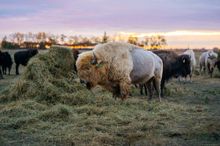
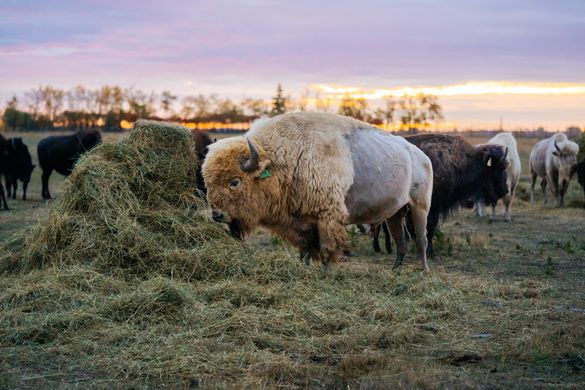
- Métis Crossing offers a Visions, Hopes and Dreams Wildlife Tour that treats guests to encounters with rare white bison, wood bison and plains bison, as well as elk and Percheron horses. Bison (or “bufloo” in Michif, the language of the Métis) last roamed the area in 1865, when thousands of Métis people gathered to hunt; these gatherings were an important conduit towards shaping the Métis Nation's laws and judicial systems. Learn about the history of bison in the region during this two-hour experience, which an opportunity to enter the paddocks alongside the animals.
Saskatchewan
- Over 6,000 years ago, Wanuskewin Heritage Park echoed with the hooves of bison and the voices of Indigenous Peoples from across the Northern Plains. One hundred and fifty years after the bison disappeared, Wanuskewin partnered with Parks Canada in December 2019 to welcome bison back to their original prairie home. Since then, the conservation herd has grown with the birth of new calves and the introduction of American bison, promoting a healthy and diverse population. Viewing tips: Wander the park's Bison Viewing Trail – a 15-minute stroll – to catch a glimpse of the roaming herd.
- Prince Albert National Park is home to one of Canada's few remaining populations of free-ranging plains bison within their historic range. Parks Canada is currently undergoing bison co-management and research to help restore a healthy bison population that thrives on the landscape inside and outside the park. Viewing tips: See the Sturgeon River plains bison herd – estimated at 120 individuals – on the Valleyview Trail Network, located on the park's west side.
Manitoba
- FortWhyte Alive, an urban prairie preserve in Winnipeg with 267 hectares (660 acres) of reclaimed greenspace, is home to the largest urban bison herd in the world. The herd was introduced in 1999 with a donation of five animals from the Manitoba Bison Producers and 17 animals from Riding Mountain National Park; it's since grown with as many a dozen calves born each spring. Viewing tips: There are several options for viewing the herd. The Baby Bison Walk (May and June) shares the story of bison in Manitoba while showcasing the cuteness of baby bison; the Bison Safari (summer) takes guests into the prairie for an up-close encounter; and A Prairie Legacy: The Bison and its People (summer) tours the forest, prairie and lake, as well as a Plains Cree tipi.
- Lake Audy Bison Enclosure in Riding Mountain National Park is home to a bison herd reintroduced in 1931. At the time, there were 20 bison; since then, the number has doubled. Viewing tips: The bison enclosure is a 45-minute drive from the township of Wasagaming and Onanole, though you can also camp overnight.
Readers wanting more information on Canada as a holiday destination should go to www.explore-canada.co.uk
For more media information please contact Ms. Nim Singh, Media and PR Manager, Destination Canada singh.nim@destinationcanada.com (not for publication )
Image Credits :
Alberta - Bison
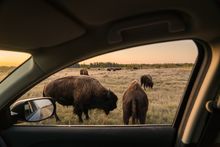
Manitoba - Bison through car window
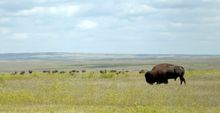
Saskatchewan - Grasslands Bison