11 Aug 2021
Tags: Japan, Aichi, Aichi Prefecture, Crafts, arts and crafts, Ceramics, Art, Expereinces, Tradtional, Japanese

When looking for inspiration for things to do on your next Japan trip, you might want to add some hands-on cultural experiences to your itinerary to spice things up. With a diverse history of distinctive crafts, Aichi Prefecture is the perfect one-stop destination for traditional crafts and workshops where the eager traveller can have a try. Not only do workshops provide travellers with wonderful opportunities to learn about the crafts, but they also allow you to create personalised souvenirs, a memento of your trip.
Here are 3 of Aichi’s revered traditional crafts and their workshops that you don’t want to miss for your next Japan travel plan.
1. Ceramic pieces – Tokoname-ware and Seto-ware
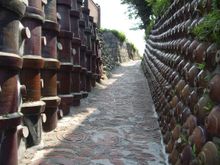
The seaside city of Tokoname has been manufacturing ceramics in Aichi since the end of the Heian period (794-1185) and is known as the largest of Japan’s six ancient kiln towns. Tokoname-ware is made with clay collected from nearby Chita Peninsula, and can be characterised by its rich colour which is caused by the high amounts of natural iron which makes the clay turn red after it is fired. In Tokoname’s heyday there were more than 3000 active kilns, and by walking the Tokoname pottery footpath, visitors can see the many historic structures, ceramic lined alleyways, and private galleries throughout, as well as seeing ‘Tokonyan’, a giant beckoning cat's head, one of Tokoname’s most recognisable icons.
Experience: Visitors can test their skill on the potter's wheel at various private studios around Tokoname, such as the Seiko ceramics workshop and make their own cups or plates. At the Tokoname Store built within an old warehouse, aside from participating in ceramics workshops, visitors can browse the stores’ unique brand pieces made by local artists and even relax with a coffee and some sweets served on Tokoname-ware.
Another one of Japan’s six ancient kiln towns in Aichi, Seto sits inland surrounded by low hills rich in natural resources for pottery, including kaolin clay for earthenware and silica sand used for glazing. The town has a backdrop of one thousand years of pottery, stoneware and ceramics history and culture. One of the most notable differences between Tokoname-ware and Seto-ware is the fine pottery glaze. Amongst the several types of Seto-ware, the Sometsuke blue and white porcelain is characterised by patterns drawn on the white porcelain in a rich blue pigment. Seto remains a bustling centre of pottery and visitors will be happy to see creative artisans continuing to produce both traditional and modern ceramics to this day.
Experience: The Seto-Gura Museum offers hands-on experiences in the pottery workshop areas, as well as displays of fine pottery, ceramics and a nostalgic reproduction of parts of the old town, including old shops, houses, kilns, and more.
2. Tie-dyed fabrics - Arimatsu Narumi Shibori
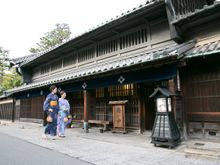
Hidden in the South-Eastern suburbs of Nagoya City lies Arimatsu, a small town which boasts a long and impressive history. One of Arimatsu’s main attractions is a narrow street that was once part of the great Tokaido Road - the ancient highway linking Japan’s old capital, Kyoto, and Edo (modern day Tokyo). Unchanged from the time of samurai, the street is still lined with houses, shops and even warehouses. Arimatsu entered prosperity in the early 1600s when local artisans created Arimatsu Narumi Shibori, an intricate and time-consuming tie-dyeing technique that creates stunningly complex patterns. Using special stands and hooks to perfectly align the hundreds and thousands of repetitive knotted sections, the artisans can spend months working on one kimono or summer yukata garment. There are many stores in Arimatsu where you can buy souvenirs including clothing and accessories.
Experience: In the Arimatsu Narumi Tie-Dyeing Museum, visitors can enjoy lessons on Arimatsu-Shibori making your own t-shirts, table runners and more, as well as seeing the range of fabrics and kimono on display as well as watching artisans preparing different fabrics for dying.
3. Enamel Cloisonne - Owari Shippo
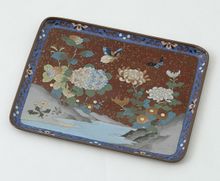
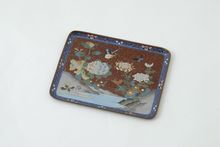
Owari Shippo is an enamelware craft traditional to Aichi's Ama City. The first pieces were made where Aichi's capital City Nagoya is now situated, during the Owari samurai clans’ rule – hence the name Owari Shippo. Shippo is a method of decorating objects such as vases and plates which are made of either copper or silver with enamel. One of the most defining features of Aichi’s Owari Shippo is the flora and fauna inspired patterns which are outlined with gold or copper wires. Once the wirework has been glued in place on the surface, the individual sections are then filled with the coloured enamel paste and then fired in layers, creating vivid and intricate designs which can take weeks to complete. When in Ama City you can find an array of items for sale including vases, dishes, and jewellery.
Experience: Learn more about Owari Shippo, see historic pieces and even make your own original piece of Owari Shippo jewellery at the Shippo Art Village in Ama City.
-END-
Aichi Prefecture, Japan
Known to locals as the ‘heart’ of Japan, Aichi Prefecture boasts a colourful past as a crucial point for traffic between east and west Japan. It is highly diverse and is a melting pot where were rustic Japanese charm meets innovation and technology.
How to travel to get to Aichi
By bullet train: One hour and 40 minutes from Tokyo, 50 minutes from Osaka and just 35 minutes from Kyoto to get to Nagoya, Aichi Prefecture’s capital and Japan’s fourth largest city.
By air: Aichi Prefecture’s international airport, Chubu Centrair International Airport offers ease of access from other airports in Japan, as well as for those flying from Australia via South East Asia.
For Australia and New Zealand media enquiries, please contact Amelia Spagnolo-Messinger at amelia@thedoq.com or call 0406 604 032.