 27 Sep 2022
Tags: Conservation, Breeding, Seahorse, White's Seahorse, sea life sydney aquarium, Aquarium, Attraction, Ocean Release, Botany Bay

SEA LIFE Sydney Aquarium's 3rd year breeding and releasing White's Seahorses to save the native species.
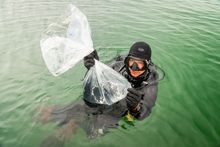
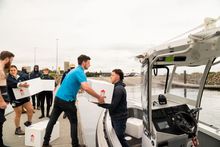
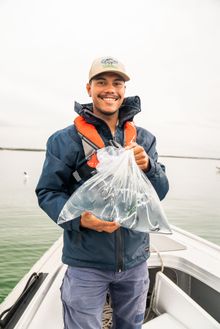
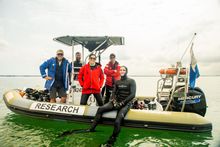
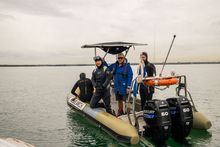
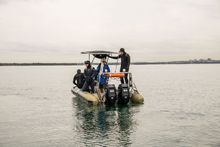
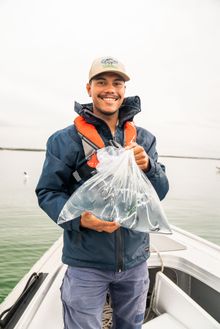
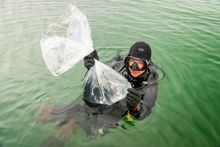
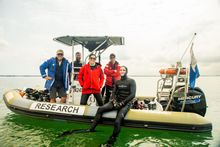
SYDNEY, Tuesday 27th September 2022: Following a three year ongoing collaboration to help recover the declining population of the White's Seahorse, experts from SEA LIFE Sydney Aquarium have successfully bred and raised 111 juveniles, and assisted in their release back into the wild, at 15 reimagined seahorse hotels, in Botany Bay, Sydney.
The species, also known as the Sydney Seahorse, has seen a dramatic population decline over the past decade, and has been listed as 'Endangered' in NSW. It is now Australia's only threatened seahorse species and the second endangered seahorse species worldwide.
This is the third successful seahorse release into the wild, from the exciting conservation collaboration, implemented in December 2019, by SEA LIFE Sydney Aquarium in Darling Harbour.
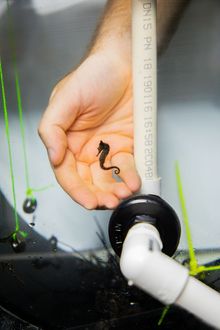
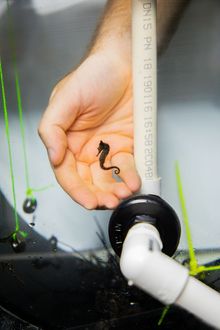
In September 2021, aquarists paired-up breeding adults for the third time. Babies were born and raised from October 2021 and put on display in the onsite custom built facilities, enabling visitors to the aquarium, to witness the enchanting creatures first-hand.
In July 2022 the juveniles were carefully tagged for future monitoring, injected just under their skin, with coloured elastomer fish tags in a unique pattern, allowing them to be individually identified.
Daniel Sokolnikoff, Aquarist and Seahorse Expert at SEA LIFE Sydney Aquarium is leading the Sydney Seahorse Breeding Project and commented, “It means the world to the team at SEA LIFE Sydney Aquarium, to lead the charge, collaborating with such highly esteemed experts and to be able to contribute towards the recovery of a species that really needs our help, in our own backyard. We have taken some really exciting steps over the last three years and will continue to do so for years to come”.
The collaboration between industry experts includes the Gamay Rangers and the Sydney Institute of Marine Science - a collaboration between scientists from the University of New South Wales (UNSW), the University of Technology Sydney (UTS) and industry experts from the NSW Department of Primary Industries (DPI) Fisheries and the Gamay Rangers.
Dr David Harasti, Senior Marine Scientist with DPI Fisheries, has over a decade of experience working with seahorses and will oversee the release and follow-up and said, “Today was another milestone of success in the conservation stocking program. The conservations actions being implemented in this large collaborative project, such as the restocking and the deployment of artificial seahorse hotels, are helping ensure this Endangered seahorse is given every chance to recover.”
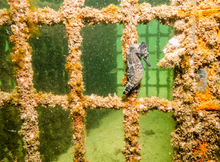
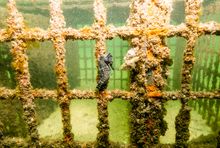
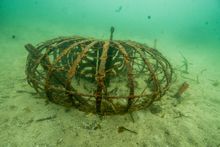
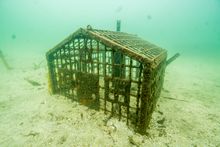
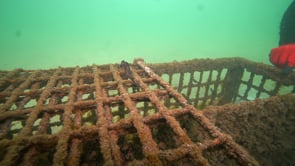
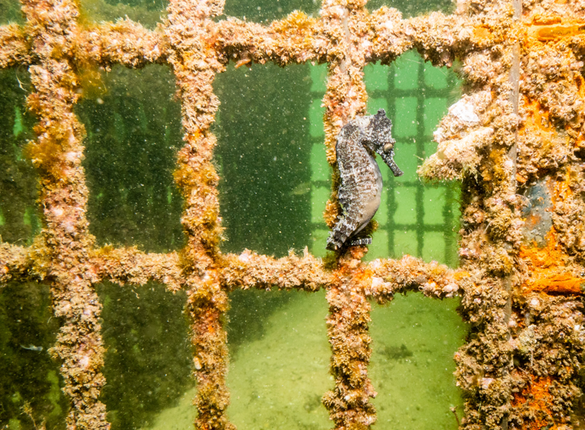
This year, joining the former box hotel design of the last 2 years, a new 'Nautilus shell' design, with nature-mimicking curves and a fun 'House' design were both developed by Dr Kate Dunn and her team of researchers from UNSW's Built Environment Design Futures Lab, trialling a variety of structures and materials to see if any of them are preferable for the species.
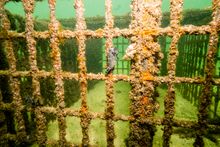
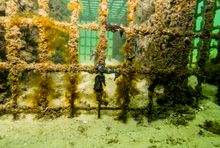
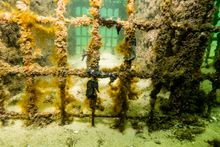
Over the last few months, they have been grown over by sponges, algae and animals that colonise these structures, making them the perfect for seahorses to curl their tails around and call home.
In a “two-for-one” approach, Professor Adriana Vergés and her team of researchers at UNSW and the Sydney Institute of Marine Science have been using the methods developed as part of “Operation Posidonia” to plant Posidonia seagrass, the White's seahorse preferred natural habitat and also an endangered species, in association with the seahorse hotels.
“We are hoping that by combining the use of seahorse hotels with the restoration of Posidonia we are giving seahorses the best chance of recovery, while we also work on the recovery of their natural habitats,” says Professor Vergés.
To monitor the progress, research students at UTS will conduct regular diving surveys at the seahorse release sites in Botany Bay, to assess the growth, survival and breeding in the wild. They will also determine if there has been migration from one hotel design to another, via the coloured seahorse tag system, to indicate any habitat preferences and inform future hotel designs.
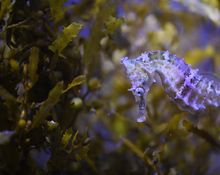
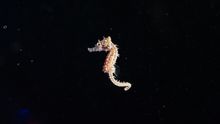
White's Seahorse also known as the Sydney Seahorse
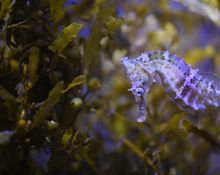
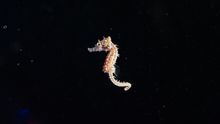
The species was named after John White, Surgeon General to the First Fleet and is endemic to the east coast of Australia. White's Seahorses can be found in a variety of colours and they actually can change their colour to match what they are living on.
To find out more about the White's Seahorse, visit the NSW DPI website: https://www.dpi.nsw.gov.au/fishing/species-protection/what-current/endangered-species/whites-seahorse
For more information on the Seahorse Project or to secure tickets to SEA LIFE Sydney Aquarium, visit: https://www.sydneyaquarium.com.au/
For more information on the co-restoration of this endangered seahorse and its habitat, visit:
https://www.operationposidonia.com/seahorse-hotels
- ENDS –
Footage: SL // SeaHorse_RAW_v1 (vimeo.com)
Media Contact:
Charli Beale, PR Manager at Merlin Entertainments, Charli.Beale@merlinentertainments.com.au
0428 095 393
About Merlin Entertainments
Merlin Entertainments is a global leader in location-based, family entertainment. As Europe's Number 1 and the world's second-largest visitor attraction operator, Merlin operates over 140 attractions, 23 hotels and 6 holiday villages in 24 countries and across 4 continents. Merlin's purpose is to deliver memorable experiences to its millions of guests around the world, through its iconic brands and multiple attraction formats, and the commitment and passion of its employees.
About DPI
The NSW Department of Primary Industries (DPI) works to increase the value of primary industries and drive economic growth across NSW. DPI Fisheries supports economic growth and sustainable access to aquatic resources through commercial and recreational fisheries management, research, aquaculture development, threatened species and habitat protection and rehabilitation, regulation and compliance. The division mitigates and manages risks from use of land and water, including from sharks and hunting through the Game Licensing Unit.
About UTS
The University of Technology Sydney (UTS), located in central Sydney, is one of Australia's leading universities of technology. It is known for fusing innovation, creativity and technology in its teaching and research and for being an industry-focused university. UTS has a total enrolment of over 40,000 students and is rated No.1 'young' university in Australia in both the QS and Times Higher Education rankings. For more information go to uts.edu.au.
About the Sydney Institute of Marine Science
The Sydney Institute of Marine Science (SIMS) is a world-leading marine science institute and the principal marine research facility in NSW. SIMS is a partnership between Macquarie University, UNSW Sydney, the University of Sydney and the University of Technology, Sydney. The partnership is enhanced by collaborations with state and federal government departments, and the Australian Museum. SIMS has over 100 scientists and graduate students associated with the Institute, representing a broad diversity of skills in marine science. For more information go to www.sims.org.au
About UNSW Sydney
UNSW is one Australia's leading research and teaching universities, with over 7,000 staff and over 63,000 students from 132 countries. UNSW is a recognised world leader in addressing society's critical challenges within environmental science, climate change and the built environment. UNSW is committed to embracing diversity of thought, integrity, innovation, and to fostering deep connections with the community. For more information go to www.unsw.edu.au
About the Gamay Rangers
The Gamay Rangers care for Country located on Gamay (Botany Bay) in Sydney, New South Wales.
They undertake natural and cultural resource management activities on cultural areas within Botany Bay, and on conservation land owned by the La Perouse Local Aboriginal Land Council.