 17 Dec 2013

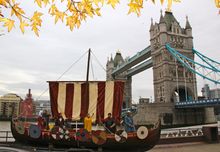
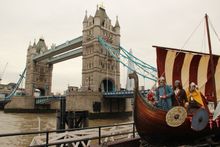
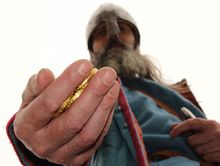
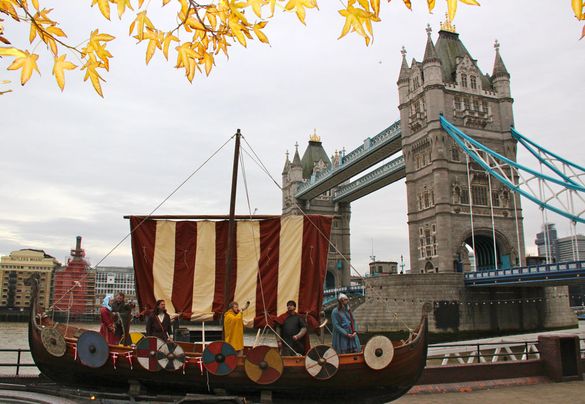
1000 years ago, Danish Viking King Sweyn Forkbeard invaded London, overthrew Ethelred the Unready and became the King of England. To mark this millennium, a group of Vikings embarked their Viking ship at St Katharine Docks today, having come over from Denmark - not to invade the Docks but to drink peace and hand back tokens of the 'Danegeld' in the form of special gold coins.
The Vikings are coming...
In connection with the anniversary Denmark is staging a series of spectacular new exhibitions and events across both England and Denmark, recreating a real taste for authentic Viking life and culture. Highlights include the new major exhibition 'VIKING' from the Danish National Museum in Copenhagen which is transferring to the British Museum in London in March 2014 and will be the first major exhibition on Vikings at the British Museum for over 30 years. The BP exhibition Vikings: life and legend opens in the new Sainsbury Exhibitions Gallery at the British Museum on 6 March 2014.
Gareth Williams, Vikings exhibition curator at the British Museum, said: "The geographical range and the extent of cultural contacts in the Viking world make a remarkable story, with a lasting legacy in many countries, not least here in Britain. New discoveries and research have led to a wealth of new information, and our understanding of Viking society is developing all of the time. The achievements of the Vikings went far beyond the familiar image of violent raiders. Even so, the fact that it is now a thousand years since the whole of England was conquered by a Danish king makes this an appropriate moment to look again at this important period in our shared history."
Henrik Kahn, Director of VisitDenmark UK & Ireland said "The reach and cultural connections of the Viking Age make it a remarkable story shared by many countries, not least here in the British Isles. This year, we've seen a huge increase in the number of British visitors to Denmark and we are proud to be able to mark the 1000 years of our shared heritage by drinking peace and returning the Danegeld".
Notes to editors
Viking Kings of England - a brief historical account
Sweyn Forkbeard was the King of Denmark and he also became King of England for a short period of time. Sweyn was also the father of Cnut the Great who also became King of England. In 988 Sweyn overthrew his own father Harold Bluetooth Gormsson, the King of Denmark. Sweyn then led a large number of raids along the east and south coasts of England. England was a rich country and the Danes were able to attack villages and religious communities without too much resistance. Much of the time the English paid the Danes money to save their land from being ravaged and this money is known as Danegeld. In 994, with a huge fleet of 94 ships, Sweyn sailed into the Thames estuary along with the Norwegian Olaf Trygvasson by his side to plunder England. London put up a good defence and drove the Vikings back so Forkbeard moved his forces south to attack the south-east coast and to plunder whatever he could find. Sweyn's attacks on England continued for ten years until 1013 when he invaded London with his son Cnut and took control of the country. The English King, Aethelred, along with his wife and sons were forced to flee to Normandy for their own safety. Sweyn was King of England for only a few months before he died in February of 1014. After Sweyn's death, Cnut left England and Aethelred returned from Normandy to reclaim the English throne.
BP exhibition Vikings: life and legend at British Museum
At the centre of the BP exhibition Vikings: life and legend will be the surviving timbers of a 37-metre-long Viking warship, the longest ever found and never seen before in the UK. The ship dates from around AD 1025, the high point of the Viking Age when England, Denmark, Norway and possibly parts of Sweden were united under the rule of Cnut the Great. The extraordinary Viking expansion from the Scandinavian homelands created a cultural network with contacts from the Caspian Sea to the North Atlantic, and from the Arctic Circle to the Mediterranean. The Vikings will be viewed in a global context that will highlight the multi-faceted influences arising from extensive cultural contacts. Visitors will also see a number of unique objects and new finds, such as large hoards of gold and silver found in England, jewellery from Russia, coins traded from the Middle East and found in Scotland as well as weapons from across Scandinavia.
For further press information
Email Kathrine Lind Gustavussen, Press Officer, VisitDenmark: klg@visitdenmark.com