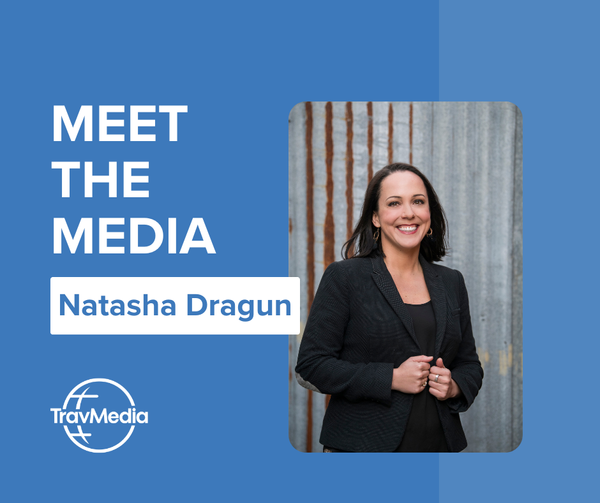
Welcome to “TravMedia's Travel Writer of the Week," where we highlight an active journalist or editor within the TravMedia community. We have so many amazingly talented, successful and inspirational professionals in our midst — let's meet Natasha Dragun
Q. Where are you based?
Sydney – I've been here for the past 16 years. I was born in the US, raised in Melbourne, and spent nine years living and working across Beijing and Jakarta before settling here.
Q. What outlets do you write for?
I've previously been Managing Editor of MiNDFOOD, Vacations & Travel and DestinAsian. I now freelance across a mix of titles including Luxury Travel, Robb Report, Escape, Roam, The Australian, Condé Nast Traveller, GQ and delicious., alongside custom publications and corporate clients like Tourism Australia, Discover Aboriginal Experiences, Destination NSW, Journey Beyond and Great Walks of Australia.
Q. Who is your audience?
It varies depending on the brief – consumer, trade and corporate. I tend to adapt tone and depth accordingly, but the common thread is storytelling that's grounded, informed and accessible.
Q. What are your travel specialties?
Asia feels like a second home after nearly a decade living there – I speak passable Mandarin and Bahasa (on a good day), and have travelled extensively across the region. Editorially, I'm drawn to adventure-led travel – particularly hiking and expedition cruising – ideally balanced with strong design, food or wellness elements.
Q. What is a professional pet peeve?
The assumption that travel writing is a holiday. Most trips are tightly scheduled, and a lot of the work happens before and after – or very early in the morning while everyone else is asleep. It's incredibly rewarding, but it's still work.
Q. In your past professional life, you were…
I originally wanted to be a criminologist, which led me to study psychology. I briefly worked in usability research, running qualitative testing for companies looking to understand how consumers interact with products. It was interesting, but I realised pretty quickly I'd rather be telling stories than analysing surveys.
Q. Where would you like to return to?
Italy – my partner is from Rome, and travelling there with him gives me a completely different perspective on the country. And Iran, which remains one of the most visually and culturally striking places I've visited, though I suspect it won't be on the cards again any time soon.
Q. What's on your bucket list?
Rwanda, Uganda, Ethiopia and Egypt – there's a lot of Africa I'd love to explore properly. And Central Asia – the Stans have been sitting there for a while.
Q. Where do you travel for fun?
Honestly, home. Or anywhere I can dive or snorkel – that's often a deciding factor.
Q. Your funniest (or most harrowing) travel story is…
More than two decades ago in China, I set out solo to see the Longji (Dragon's Backbone) rice terraces – long before they became an Instagram sensation with anything resembling proper infrastructure. It turned into a 16-hour ordeal involving a rat-infested guesthouse, a 3am bus ride next to someone violently motion sick, crawling out a window just to reach the 'bathroom' – where fellow travellers were deeply intrigued by a foreigner attempting to pee – a washed-out road and a rope bridge run by a 12-year-old charging a toll. There were multiple broken-down buses, long stretches of hiking with a 20kg backpack, and eventually hitching rides on a tractor, a donkey, and the back of a truck with a group of farmers who insisted I chain-smoke with them. I arrived exhausted, in the middle of winter, to a hotel with no hot water. But I had a cold shower, a beer and a bowl of dumplings. I'm pescatarian. The dumplings were pork. I ate every last one. The terraces were incredible, but the journey was the real story.
Q. What advice would you give your younger professional self?
Don't be afraid to take a chance if you're not happy. The best things tend to happen when you stay open to opportunities – even if they come with a bit of fear about what's next. That feeling is usually a good sign.
Q. How best should people contact you?
natasha@freelancemediasolutions.com
